Electrical Safety (Wet Conditions) Toolbox Talk (UK Construction)
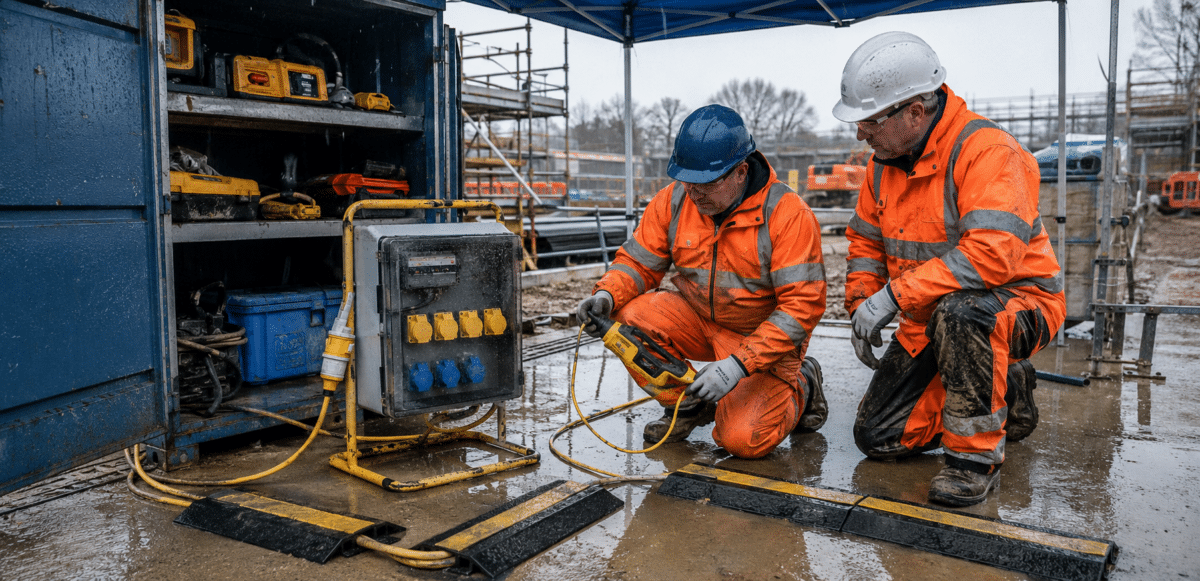
Topic: Electrical Safety in Wet Conditions Toolbox Talk
Toolbox Talk Pack: 20 Seasonal Outdoor Working Toolbox Talk Pack
Availability: This individual Toolbox Talk is available as a FREE download
Region: UK
Electrical Safety in Wet Conditions Toolbox Talk Guide

Rain, standing water and damp equipment can turn a routine electrical task into a serious site risk. Electrical safety in wet conditions belongs within toolbox talk topics for UK construction because temporary supplies, power tools, lighting and connections are frequently moved or exposed as work progresses.
This guide explains where wet-weather electrical failures develop, who may be affected and how equipment selection, positioning, checks, isolation and supervision can keep the planned controls effective.
Jump to section
What is Electrical Safety in Wet Conditions in construction?
Electrical safety in wet conditions means preventing danger where electrical systems or equipment may encounter rain, spray, condensation, standing water, saturated ground, wet hands or damp materials. The assessment should consider the equipment, supply voltage, connectors, protective devices, cable routes and the way the task will actually be carried out.
Weather resistance is not a substitute for good condition and correct use. A suitable enclosure can still be defeated by a damaged seal, loose cable gland, open cover or connection left in a puddle. An RCD can reduce risk from some faults, but it does not make damaged equipment or unsafe work acceptable.
Why it matters on UK construction sites
Wet surroundings increase the chance of injury from electric shock, particularly where a person is also in contact with the ground, scaffolding, pipework or other metalwork. Water entering unsuitable or damaged equipment can make exposed metal or nearby wet surfaces live. Consequences may include shock, burns, arcing, fire and loss of control. A shock at height or beside moving plant can also cause a secondary fall or collision. Tripped supplies may remove temporary lighting, pumps or other equipment and create further hazards and programme disruption.
Who is exposed and how
Groundworkers, carpenters, bricklayers, roofers, scaffolders, cleaners, maintenance teams and plant operatives may handle power tools, pumps, chargers, leads or temporary lighting. Electricians and supervisors may be exposed while inspecting, isolating or repositioning supplies. Workers nearby can contact wet metalwork, damaged cables or conductive surfaces without using the original equipment. Visitors, delivery drivers and members of the public may also enter an affected area if connections and distribution equipment are not segregated.
Typical site tasks where this comes up
The risk is not limited to electrical installation work. It arises wherever temporary or portable power meets changing outdoor conditions.
- Using drills, saws, breakers, mixers or cutting equipment outdoors during rain or on saturated ground.
- Installing or moving temporary distribution boards, transformers, lighting strings and extension leads.
- Operating sump pumps, drainage equipment or other powered plant around excavations and standing water.
- Working on roofs, scaffolds, facades or steelwork where surfaces, tools and workers may all be wet.
- Refurbishment, cleaning or washdown in basements, plant rooms and partially enclosed areas affected by water ingress or condensation.
Common failure modes
Problems often develop after the original setup, when weather, access or equipment condition changes.
- Domestic plugs, leads or accessories are used where they are not robust or suitable for site and weather exposure.
- Plug-and-socket joints, splitters or cable reels are left on wet ground, beneath leaking covers or where runoff collects.
- Distribution boards, transformers or chargers are relocated without restoring their shelter, drainage, stability or segregation.
- Cable sheaths, plugs, seals or enclosures are damaged by vehicles, doors, sharp edges, mud or repeated handling.
- Damaged leads receive makeshift tape repairs instead of being removed and repaired or replaced by a competent person.
- A tripping RCD is repeatedly reset or bypassed without the fault and affected equipment being investigated.
- Battery tools are used outdoors but their mains chargers and extension connections remain exposed in a damp area.
- Work continues after heavy rain because the equipment was suitable when issued, although its present condition and location have not been rechecked.
Pre-start checks
These checks are a starting point only. They do not replace the project's risk assessment, method statement or task-specific electrical controls.
- ☐ Conditions: Check the forecast, current rainfall, standing water, runoff, condensation and likely changes during the planned task.
- ☐ Power choice: Confirm whether electricity can be avoided or battery, air-powered or reduced-voltage equipment can be used.
- ☐ Suitability: Verify that tools, connectors, enclosures and supplies are suitable for their intended use and expected wet environment.
- ☐ Condition: Inspect plugs, cables, glands, guards, covers and casings for damage, contamination, overheating or makeshift repairs.
- ☐ Position: Keep distribution equipment and connections protected, stable, off wet ground and away from vehicle routes or collecting water.
- ☐ Protection: Confirm the required RCD is installed, enclosed and functioning through the planned test procedure. Never bypass it.
- ☐ Response: Identify the safe isolation point, control access and agree who will stop the work and contact a competent person if a fault appears.
How incidents happen and how to prevent them
A typical event begins when rain or runoff reaches equipment that is unsuitable, damaged or badly positioned. Moisture enters a connector or casing, while a damaged protective conductor, ineffective RCD or poor isolation allows a dangerous condition to remain. A worker then touches the equipment, wet ground or connected metalwork and receives a shock. If the person is on access equipment or beside plant, the initial contact can trigger a second incident.
Prevention starts before the task by removing the electrical need where practical, selecting equipment for the environment and arranging a protected supply. Route and support cables, keep connections clear of water, inspect after weather or layout changes and stop when conditions exceed the planned controls. Isolate suspect equipment if it is safe to do so, prevent further use and have it assessed by a competent person.
⚠️ Hypothetical site example: A drainage pump is moved after heavy rain and its extension connection is left beside a flooded excavation. A dumper has damaged the cable sheath, and the RCD trips when the pump starts. Resetting the device would conceal the warning. Stopping work, isolating the supply, excluding the area and replacing the damaged arrangement prevents further exposure.
When risk increases
Reassess the work whenever moisture, equipment, access or the temporary electrical arrangement changes.
- Heavy rain, thawing snow, flooding, leaks or washdown introduces water beyond the planned exposure.
- Workers are surrounded by scaffolding, structural steel, pipework or other earthed metalwork.
- Pumps, lights or tools are introduced urgently to recover a flooded or delayed work area.
- Cables are rerouted through doorways, access routes, mud or standing water as the site layout changes.
- Hired equipment, replacement leads or extra splitters are added without checking compatibility and suitability.
- Night work, poor lighting, gloves, cold hands or time pressure make damage and water entry harder to notice.
UK regulations and compliance
For work in Great Britain, The Electricity at Work Regulations 1989, regulation 4 requires electrical systems to be constructed and maintained to prevent danger, so far as is reasonably practicable. Work activities must not give rise to danger, and protective equipment must be suitable, maintained and properly used.
The wet-weather duty is especially clear in The Electricity at Work Regulations 1989, regulation 6. Equipment that may reasonably foreseeably be exposed to weather, wet, dirty, dusty or corrosive conditions must be constructed or protected as necessary to prevent danger, so far as is reasonably practicable.
Northern Ireland has parallel requirements under The Electricity At Work Regulations (Northern Ireland) 1991, including duties concerning systems, work activities, protective equipment and adverse or hazardous environments.
The HSE Electricity - Systems in Buildings guidance advises construction sites to use cordless tools or 110V centre tapped to earth supplies for portable equipment. Where 230V equipment is used, HSE highlights the higher risk from damage or faults and the need for effective RCD arrangements, inspection and protection from moisture and dirt.
The HSE Work Using Electrically Powered Equipment guidance recommends considering battery, air-powered or reduced-voltage equipment in damp environments. It explains that an RCD is a secondary protective measure, does not detect every fault and should not be used to justify damaged equipment or unsafe conditions.
Key regulations and guidance
The Electricity at Work Regulations 1989, regulation 4 - covers safe construction, maintenance, work activities and protective equipment in Great Britain.
The Electricity at Work Regulations 1989, regulation 6 - addresses equipment exposed to weather, wet and other adverse environments in Great Britain.
The Electricity At Work Regulations (Northern Ireland) 1991 - provides parallel electrical safety requirements for Northern Ireland.
HSE Electricity - Systems in Buildings guidance - gives construction-specific advice on portable supplies, RCDs, inspection, isolation and competence.
HSE Work Using Electrically Powered Equipment guidance - covers damp-environment equipment choices, condition checks and RCD limitations.
Practical controls that make the difference
Start with the supply and work method. PPE may support the system of work, but it must not replace suitable equipment, protection, isolation and competent electrical control.
- Avoid the exposure: Reschedule non-essential electrical work, remove standing water or use a non-electrical method where reasonably practicable.
- Choose a safer power source: Use battery, air-powered or suitable reduced-voltage equipment where the assessment identifies a damp or harsh environment.
- Protect the installation: Select equipment and enclosures for the expected conditions, keep covers closed and protect vulnerable connections from rain, runoff and splashing.
- Control location and routes: Raise connections clear of wet ground, support cables and separate them from vehicles, sharp edges, doors and drainage paths.
- Use RCD protection correctly: Provide the specified protection, carry out the planned checks and treat any trip as a possible fault that requires investigation.
- Inspect when risk changes: Repeat user checks after severe weather, relocation, impact, contamination or any sign that water may have entered the equipment.
- Stop and isolate: Keep people away from suspect equipment, isolate it only where this can be done safely and use a competent person for examination, repair or electrical work.
FAQs
Can electrical tools be used outside when it is raining?
Only where the risk assessment, equipment suitability, supply and protective arrangements cover the actual conditions. Stop if water exposure, damage or the work area no longer matches the planned controls.
Does an RCD make 230V equipment safe in wet conditions?
No. An RCD can reduce risk from some faults, but it cannot prevent every electric shock and remains a secondary measure. Equipment, connections and work methods must still be suitable and safe.
What should happen if electrical equipment becomes wet or repeatedly trips?
Stop using it, isolate the supply if this can be done safely and prevent further use. A competent person should investigate before the equipment or circuit is returned to service.
Explore more toolbox talk topics for UK construction .
Get the ready-to-use Electrical Safety in Wet Conditions Toolbox Talk
Brief your site team on wet-weather electrical hazards, equipment checks, safe positioning, RCDs and fault response.