Heat Stress Toolbox Talk (UK Construction)
Topic: Heat Stress Toolbox Talk
Toolbox Talk Pack: 30 Site Essentials Toolbox Talk Pack
Availability: This individual Toolbox Talk is available as a FREE download
Region: UK
Heat Stress Toolbox Talk Guide

Heat stress can affect people working outdoors, inside enclosed areas or close to heat-producing processes. It is an important part of toolbox talk topics for UK construction , particularly when physical work, hot conditions and protective clothing combine.
This guide explains how heat stress develops, which site activities increase the risk and how supervisors can plan practical controls. It supports but does not replace the project's risk assessment, method statement, emergency arrangements, supervision or task-specific controls.
Jump to section
What is Heat Stress in construction?
Heat stress occurs when the body's normal way of controlling its internal temperature starts to fail. Air temperature is only one factor. Physical effort, humidity, air movement, radiant heat, direct sunlight and clothing or PPE can all affect how much heat the body gains and how effectively it cools itself.
Heat stress is not the same as sunburn. It can occur indoors, underground or in an enclosed space without direct sunlight. Heat exhaustion and heat stroke are possible outcomes when the body's response to heat becomes overwhelmed. Dehydration can also develop as water is lost through sweating.
Why it matters on UK construction sites
Early symptoms may include difficulty concentrating, muscle cramps, heat rash, severe thirst, dizziness, nausea, headache or fainting. These effects can also make it harder to judge distances, follow instructions, handle equipment or react to moving plant and changing site conditions.
The consequences can extend beyond the person becoming unwell. A lapse in concentration while working at height, operating plant, directing vehicles or handling a suspended load may expose colleagues and the public. Severe heat illness can become a medical emergency and requires the site's emergency arrangements to be followed promptly.
Who is exposed and how
Groundworkers, roofers, steel fixers, scaffolders, road surfacing teams, traffic marshals, plant operators and delivery teams may spend long periods outdoors or complete physically demanding work. Welders, maintenance teams and workers in plant rooms, tunnels, basements or temporary enclosures may be exposed to heat from the process and restricted air movement.
Workers wearing coveralls, respiratory protection or other restrictive PPE may be less able to lose heat through evaporation. New or inexperienced workers may not yet be acclimatised. Individual tolerance also varies, and medication, pregnancy or some health conditions may require a confidential review with appropriate occupational health or medical advice.
Typical site tasks where this comes up
Heat stress should be considered wherever heat, work rate and clothing combine, including:
- Roofing and external envelope work: prolonged exposure to sunlight and heat reflected or radiated from roof surfaces.
- Road surfacing and paving: heavy physical work close to hot materials, plant and dark surfaces that absorb heat.
- Excavation and groundworks: manual handling, limited shade and work areas below ground level with reduced air movement.
- Hot work and maintenance: exposure to radiant heat while wearing flame-resistant clothing, gloves, helmets or face protection.
- Enclosed or restricted areas: work in plant rooms, temporary enclosures, tunnels and structures with poor air movement.
- Tasks requiring restrictive PPE: activities where coveralls or respiratory protection reduce evaporation and retain body heat.
Common failure modes
Controls often fail when the assessment focuses on weather forecasts without considering the complete task.
- Air temperature used alone: humidity, air movement, radiant heat, work rate and PPE are ignored.
- Work continues unchanged: the normal sequence, pace and staffing remain in place as conditions become hotter.
- Water is technically available: the supply is warm, too far from the workface or difficult to access while wearing PPE.
- No cool recovery area: breaks take place beside the hot workface, inside a vehicle or in direct sunlight.
- Required PPE is removed: workers try to cool down while still exposed to the hazard the equipment is intended to control.
- Acclimatisation is overlooked: a new starter or returning worker begins a full high-heat workload without adjustment.
- Symptoms are hidden: workers continue because they fear delaying the task or believe dizziness and nausea are normal.
- Lone workers are not monitored: nobody notices reduced concentration, confusion or a failure to check in.
Pre-start checks
Use these checks as a starting point. They do not replace the project's risk assessment, method statement, emergency arrangements or task-specific controls.
- ☐ Review the forecast and the actual work area, including humidity, air movement, direct sun and nearby heat sources.
- ☐ Consider the work rate, planned duration, manual effort and heat retained by required clothing or PPE.
- ☐ Confirm that cool drinking water and a suitable shaded or cooler recovery area are readily accessible.
- ☐ Plan cooler working times, mechanical assistance, task rotation and recovery breaks where the assessment requires them.
- ☐ Identify new, returning or potentially susceptible workers and obtain appropriate advice without requesting unnecessary medical details.
- ☐ Make sure workers and supervisors recognise early symptoms and understand when and how to stop work.
- ☐ Confirm communication, first-aid cover and emergency access for every active workface.
How incidents happen and how to prevent them
A worker may begin a physically demanding task while wearing protective clothing in hot or humid conditions. The work generates body heat while the clothing and environment reduce cooling through sweat evaporation. Continued sweating contributes to dehydration, the heart works harder and concentration may decline. If the exposure continues, symptoms can progress from discomfort and cramps to heat exhaustion or heat stroke.
Prevention begins by reducing the heat load and physical effort. Change the timing or method, provide shade or ventilation, use mechanical aids and arrange suitable recovery periods. Workers must be able to stop, report symptoms and move to a safe recovery area without pressure to complete the task first.
⚠️ Hypothetical site example: A roofer is moving materials across a dark roof during a hot, still afternoon. Required PPE is being worn, but the water point and shaded rest area are at ground level. The worker becomes dizzy and tries to finish the load. The work should have been rescheduled or mechanically assisted, with accessible water, planned recovery breaks, local supervision and a clear stop-work response.
When risk increases
Risk can rise during the first hot days after cooler weather, when people have not acclimatised. It also increases around the hottest part of the day, during humid and still conditions, beside heat-producing plant and on roofs or hard surfaces exposed to strong sunlight.
Review the controls when work becomes more physical, shifts are extended, staffing changes or restrictive PPE is introduced. Enclosures, ventilation changes, remote workfaces and reduced supervision can also alter the risk. Complaints of uncomfortable heat or early symptoms should trigger reassessment rather than being treated as an expected part of the job.
UK regulations and compliance
In Great Britain, the Management of Health and Safety at Work Regulations 1999 require employers to make a suitable and sufficient assessment of risks to employees and others who may be affected. Foreseeable risks from heat, workload, working conditions and PPE should therefore be considered within the assessment.
HSE's Temperature in the workplace: What the law says confirms that there is no maximum workplace temperature. This does not remove the need to control heat as a workplace hazard. The assessment must reflect the actual environment, activity and people involved rather than relying on one temperature figure.
The Construction (Design and Management) Regulations 2015, Schedule 2 set minimum welfare requirements for construction sites in Great Britain. These include an adequate supply of wholesome drinking water at readily accessible and suitable places, together with suitable rest facilities.
HSE's Heat stress guidance explains that assessments should consider work rate, the working climate, clothing, PPE and individual factors. It identifies controls such as reducing heat sources, using engineering measures, limiting exposure, providing cool water and allowing workers to acclimatise.
In Northern Ireland, the corresponding Management of Health and Safety at Work Regulations (Northern Ireland) 2000 include the risk assessment duty. Projects in Northern Ireland should also apply the relevant construction welfare legislation and current HSENI guidance.
Key regulations and guidance
Management of Health and Safety at Work Regulations 1999 - assessment and management of foreseeable workplace heat risks in Great Britain.
Temperature in the workplace: What the law says - HSE clarification that heat is a workplace hazard without a fixed maximum temperature.
Construction (Design and Management) Regulations 2015, Schedule 2 - minimum construction welfare requirements, including accessible drinking water and rest facilities.
HSE Heat stress guidance - assessment factors, symptoms and practical methods for reducing heat exposure.
Management of Health and Safety at Work Regulations (Northern Ireland) 2000 - corresponding risk assessment requirements for Northern Ireland.
Practical controls that make the difference
Remove or reduce heat at source where reasonably practicable. Change the process, isolate hot plant, provide suitable barriers against radiant heat or improve safe ventilation. Introduce shade at fixed work areas and position temporary facilities away from direct sunlight or heat-producing equipment.
Reduce the physical workload through mechanical handling, smaller loads or a revised sequence. Move demanding activities to cooler periods and regulate the duration of exposure. Any task rotation or recovery schedule should be based on the assessed conditions and must not transfer excessive exposure to another worker.
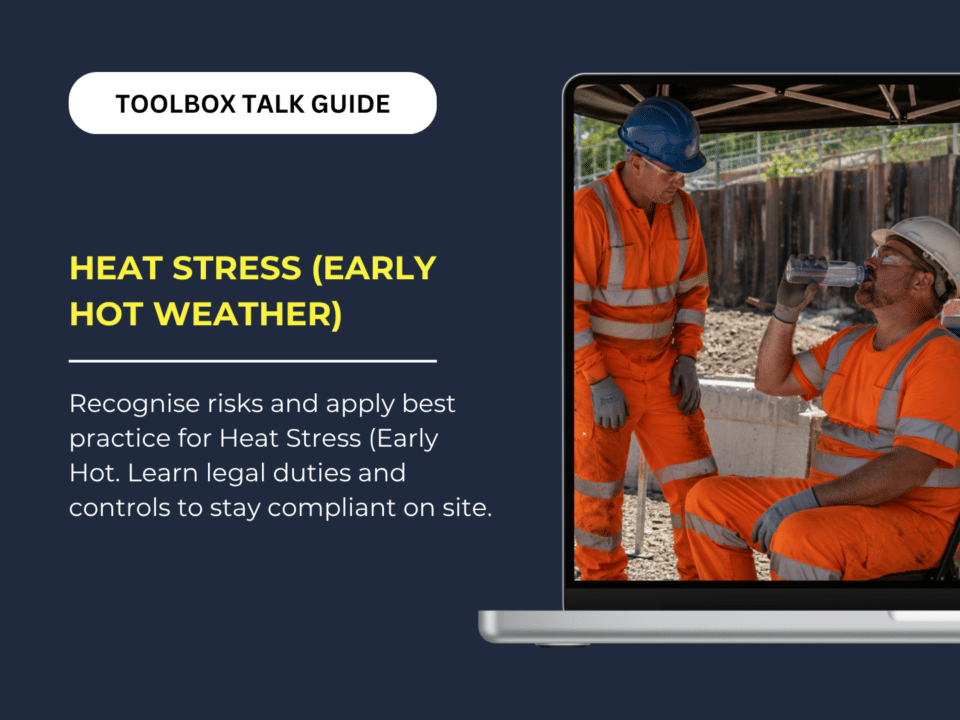
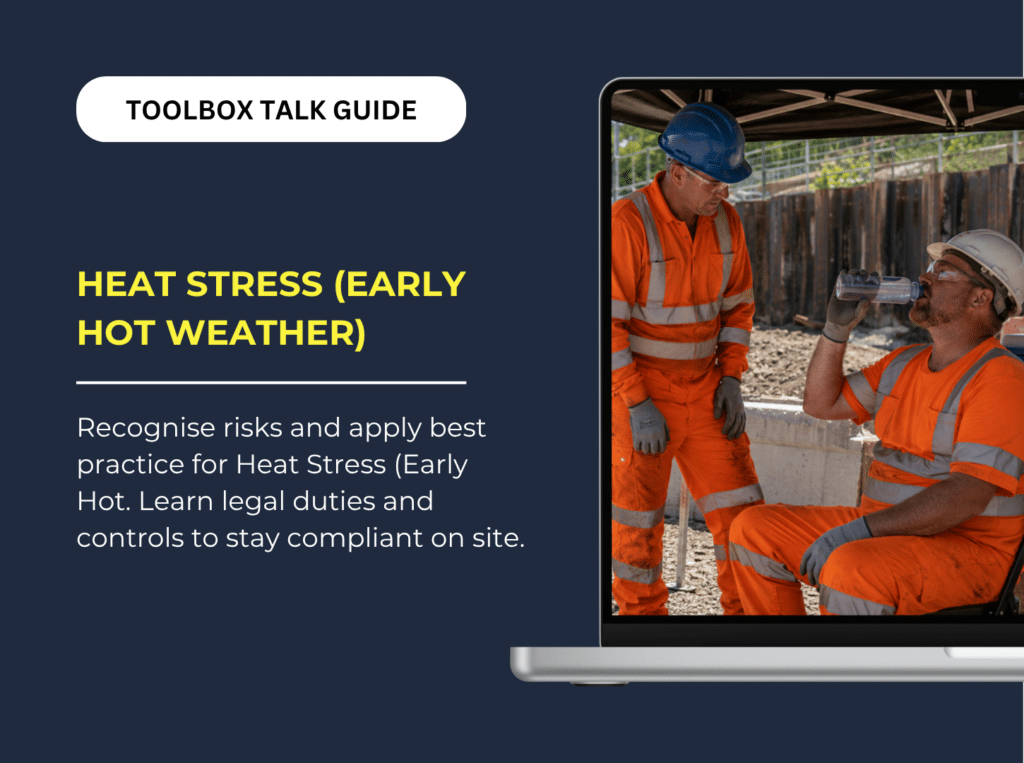
Provide cool drinking water close enough to the workface for frequent access. Arrange shaded or cooler recovery areas and make sure breaks allow workers to cool down effectively. Do not rely on thirst alone, as HSE identifies severe thirst as a late symptom of heat stress.
Review whether required PPE is suitable for the conditions and whether a lighter or more breathable option can provide the necessary protection. Where PPE cannot be changed, reduce the work rate, shorten exposure and increase recovery time. Required PPE must remain in use while the worker is exposed to the hazard it controls.
Allow workers to acclimatise and provide clear information about symptoms, reporting and emergency arrangements. Supervisors should check people working remotely or in high-heat areas and act when conditions change. Where significant residual risk remains, seek competent occupational health advice on monitoring and individual susceptibility.
FAQs
Is there a legal maximum temperature for construction work?
No. HSE confirms that there is no maximum workplace temperature, but heat remains a hazard that must be properly assessed and controlled.
Can workers remove PPE when they become too hot?
Required PPE should not be removed while the worker remains exposed to the hazard it controls. The task, timing, work rate and recovery arrangements should be changed so the worker can cool down safely.
Is providing drinking water enough to control heat stress?
No. Water helps reduce dehydration, but the assessment must also consider heat sources, humidity, air movement, physical effort, exposure time, PPE, recovery areas and individual susceptibility.
Explore more toolbox talk topics for UK construction .
Get the ready-to-use Heat Stress Toolbox Talk
Download the free Heat Stress Toolbox Talk to brief teams on risk factors, early symptoms and site controls before work in hot conditions begins.