Seasonal Safety Considerations Toolbox Talk (UK Construction)

Topic: Seasonal Safety Considerations Toolbox Talk
Toolbox Talk Pack: 20 Seasonal Outdoor Working Toolbox Talk Pack
Availability: This individual Toolbox Talk is included in the paid pack and is not available as a free download
Region: UK
Seasonal Safety Considerations Toolbox Talk Guide

Seasonal changes can alter the risks associated with familiar construction tasks. Rain, heat, frost, wind, sunlight and reduced daylight should therefore be considered within toolbox talk topics for UK construction and the project's wider planning arrangements.
This guide explains how changing conditions affect workers, access routes, equipment, materials and work sequencing. It also identifies practical checks that can help supervisors respond before weather-related problems develop. It supports but does not replace risk assessments, method statements, temporary works procedures, lift plans, permits or manufacturer instructions.
Jump to section
What is Seasonal Safety Considerations in construction?
Seasonal safety consideration is the structured review of how expected and actual weather conditions could affect planned construction work. It includes more than preparing for winter. Summer heat, ultraviolet radiation, thunderstorms, heavy rain, strong winds, frost, snow, changing ground conditions and shorter daylight hours can all require different controls.
The review should cover people, plant, temporary works, access routes, lifting operations, stored materials, welfare and emergency arrangements. It should also consider how one control might affect another. For example, enclosing a work area may provide weather protection but could change ventilation, access, lighting or fire arrangements.
Why it matters on UK construction sites
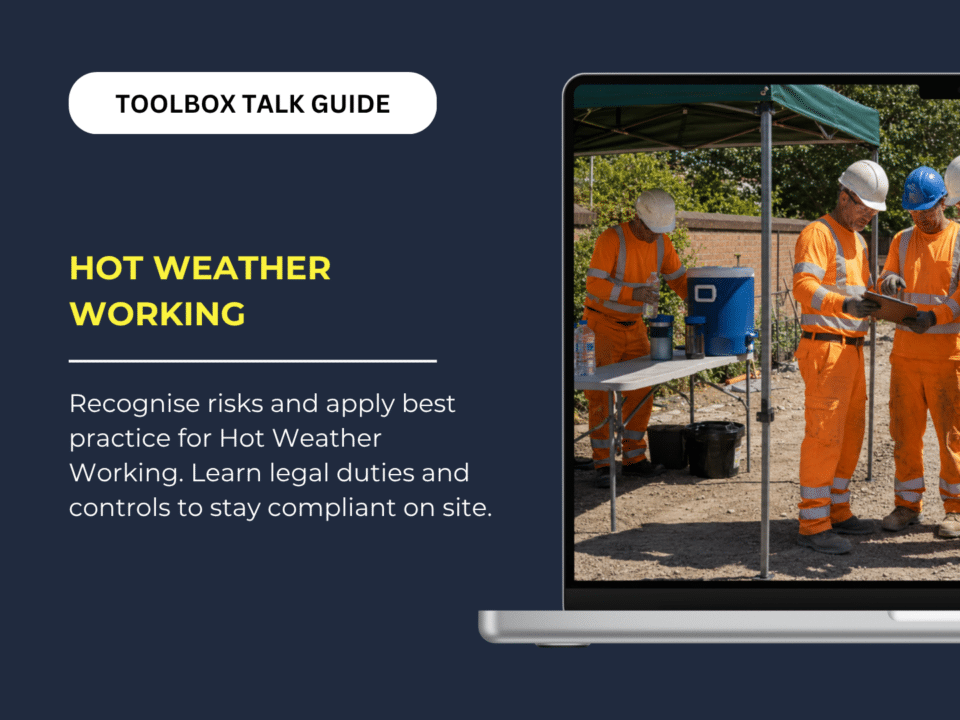
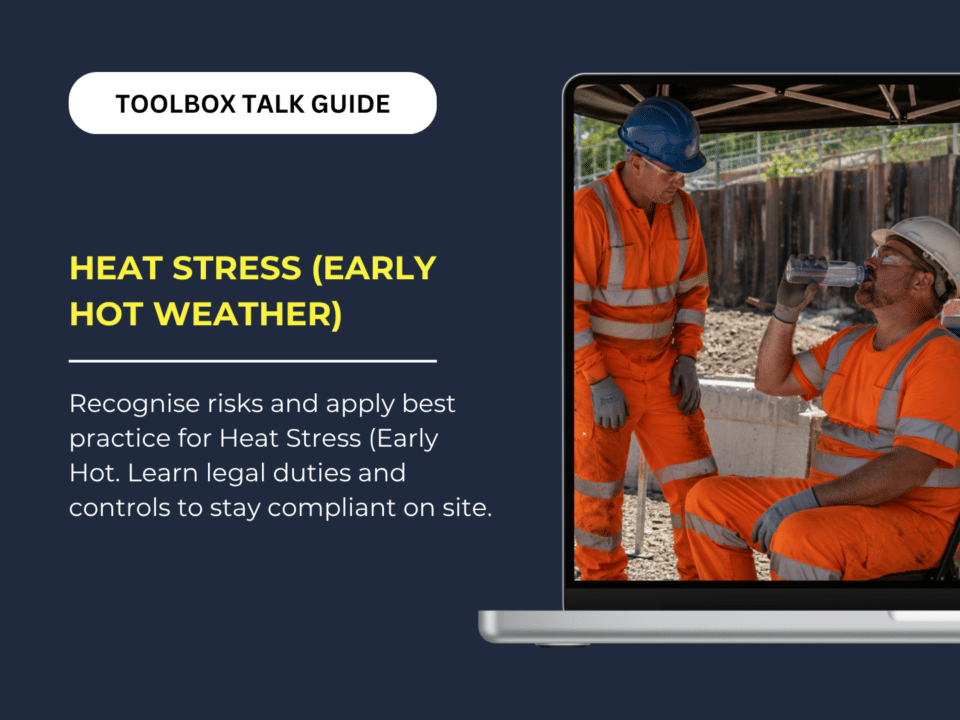
Weather can affect a worker's health, concentration, grip, visibility and ability to operate equipment safely. Heat and direct sunlight may increase thermal strain and ultraviolet exposure. Cold, wind and rain may reduce dexterity, make clothing wet and increase the time needed to complete a task.
Site conditions can also change quickly. Rain can soften ground, fill excavations and contaminate access routes. Frost may affect scaffolds, steps and working platforms. Wind can move sheets, panels, barriers or loose materials, while reduced daylight can conceal uneven ground and moving vehicles. These changes can affect safety, quality, productivity and the decision to continue work.
Who is exposed and how
Groundworkers, scaffolders, roofers, steelworkers, traffic marshals, delivery teams, plant operators and workers carrying out external inspections may experience direct exposure. People undertaking static duties can become cold without generating much body heat, while physically demanding work can increase the effect of hot or humid conditions.
Supervisors, engineers, visitors and members of the public can be affected indirectly by altered pedestrian routes, poor visibility, unstable barriers, water runoff or materials displaced by wind. Drivers and lifting teams may also encounter different ground, visibility and load-control conditions from those anticipated when the work was planned.
Typical site tasks where this comes up
Seasonal conditions should be considered wherever work depends on stable access, suitable visibility or controlled exposure, including:
- Work at height: reviewing wind, rain, frost, lightning, visibility and the condition of platforms or access equipment.
- Lifting and deliveries: checking ground conditions, load behaviour, visibility and equipment operating limits.
- Excavation and earthworks: managing water ingress, soft ground, unstable edges, drainage and access.
- Concrete, coatings and finishing: confirming that weather and substrate conditions remain suitable for the product and work method.
- Traffic management: maintaining signs, barriers, lighting, visibility and safe pedestrian routes during changing conditions.
- Outdoor manual work: controlling exposure, hydration, clothing, recovery periods and task duration.
Common failure modes
Problems often arise when weather is treated as background information instead of a changing part of the work plan.
- Forecast checked only once: the morning forecast is recorded, but later warnings and actual site conditions are not reviewed.
- Season used as a shortcut: controls are based on the month rather than the temperature, wind, rainfall and daylight actually experienced.
- No defined response: the plan says to stop in bad weather without identifying who decides or what conditions require review.
- Local conditions are overlooked: sheltered forecasts are applied to exposed roofs, elevated structures or open coastal sites.
- Conditions change after setup: scaffolds, excavations, access equipment or temporary works are used without inspection after severe weather.
- Seasonal controls create another risk: sheeting, heaters, shelters or additional clothing interfere with ventilation, fire controls, visibility or PPE.
- Programme pressure overrides review: delayed work continues even though the original method and conditions no longer match.
Pre-start checks
Use these checks as a starting point. They do not replace the project's risk assessment, method statement, temporary works procedures or task-specific controls.
- ☐ Check the current forecast, weather warnings and actual conditions at the work location.
- ☐ Confirm that access routes, work platforms, excavations and ground conditions are suitable.
- ☐ Review relevant equipment limits, manufacturer instructions and task-specific stopping arrangements.
- ☐ Check lighting, visibility, drainage, temporary protection and material storage.
- ☐ Confirm that suitable welfare, drinking water, shelter, clothing and recovery arrangements are available.
- ☐ Make sure loose materials, barriers, sheeting and temporary structures are secure.
- ☐ Brief the team on changing-condition triggers, reporting routes and who can pause the work.
How incidents happen and how to prevent them
A task may begin within the planned conditions, but rain, wind, temperature or visibility can change during the shift. Access deteriorates, equipment or materials become harder to control and the original work method no longer reflects the site. If the change is not reported, programme pressure can encourage the team to continue until several small problems combine.
Prevention depends on monitoring and response, not the forecast alone. Identify the conditions that require reassessment, inspection, relocation, additional protection or suspension. Give workers a clear reporting route and supervisors enough authority to pause work. After severe weather, inspect affected areas and equipment before reopening them.
⚠️ Hypothetical site example: A late-autumn facade delivery is brought forward after earlier rain delays. The unloading area is muddy, gusts affect the long panels and temporary lighting does not fully cover the pedestrian route. The supervisor stops the activity, reviews the lifting and traffic arrangements, relocates the exclusion zone and waits for suitable conditions before restarting.
When risk increases
Risk can increase during the first frost, sudden hot periods, storms, heavy showers, rapidly falling temperatures and transitions between seasons. Early starts and late finishes may bring glare, low light or freezing surfaces that were not present during daytime planning. Exposed structures can also experience different wind conditions from ground level.
Arrangements need closer review after weekends, shutdowns and shift changes, particularly where no one has monitored the site. Changes to work sequence, staffing, access, temporary works or nearby public areas can also make an earlier seasonal assessment unsuitable.
UK regulations and compliance
In Great Britain, The Construction (Design and Management) Regulations 2015, Regulation 34 require an outdoor construction site to be arranged, so far as reasonably practicable, to provide protection from adverse weather. The regulation requires regard to be given to the working methods and PPE used, and to the effects of the weather on workers.
HSE's Temperature in the workplace: Outdoor working explains that weather can affect workers' health and their ability to work safely. Its guidance includes reviewing exposure, providing suitable PPE and welfare arrangements, using rest breaks and considering whether work should be delayed.
HSE's Slips and trips: Frequently asked questions provides practical guidance on managing frost, ice and snow. It advises identifying vulnerable outdoor routes, monitoring conditions and carrying out gritting when freezing conditions are forecast.
HSE's Skin at work: Outdoor workers and sun exposure explains that construction workers who spend long periods outside may receive significant ultraviolet exposure. It provides guidance on covering exposed skin, using shade and managing exposure during outdoor work.
In Northern Ireland, The Construction (Design and Management) Regulations (Northern Ireland) 2016, Regulation 33 contain corresponding requirements for arranging outdoor construction sites to provide protection from adverse weather, so far as reasonably practicable.
Key regulations and guidance
The Construction (Design and Management) Regulations 2015, Regulation 34 - protection from adverse weather on outdoor construction sites in Great Britain.
Temperature in the workplace: Outdoor working - HSE guidance on managing heat, cold and outdoor working conditions.
Slips and trips: Frequently asked questions - practical HSE guidance for frost, ice, snow and affected routes.
Skin at work: Outdoor workers and sun exposure - HSE guidance for outdoor workers exposed to sunlight.
The Construction (Design and Management) Regulations (Northern Ireland) 2016, Regulation 33 - corresponding adverse-weather requirements in Northern Ireland.
Practical controls that make the difference
Build weather review into the work sequence. Use reliable forecasts and warnings, but confirm conditions at the actual workface. Assign responsibility for monitoring and define when a change requires the task, lift, access route, excavation or temporary works arrangement to be reassessed.
Reduce exposure through planning and physical controls. Reschedule work where appropriate, provide shade or shelter, improve drainage, stabilise access routes and use barriers or enclosures designed for the conditions. Secure loose materials and inspect weather-sensitive equipment or structures after severe conditions.
Maintain suitable welfare throughout the project. This can include drinking water, warm or shaded recovery areas, facilities for changing and drying clothing and suitable task-specific PPE. Check that additional clothing, weather protection or temporary enclosures do not interfere with visibility, ventilation, communication or other controls.
Make the response clear to the workforce. Explain what conditions need reporting, who makes the decision to pause or restart and what inspection is required afterwards. Record significant changes and update the task briefing when the agreed arrangements are revised.
FAQs
Can one seasonal risk assessment cover the whole year?
It may form part of the project's arrangements, but it must remain suitable for the work and actual conditions. Review it when weather, daylight, access, equipment or sequencing changes.
Is checking the weather forecast enough?
No. Forecasts support planning, but local conditions at the workface must also be monitored. Exposed or elevated areas may differ from the general forecast.
Who should decide when weather-affected work stops?
The project's arrangements should define the responsible person, relevant operating limits and escalation route before work starts. Workers should also know how to report deterioration and pause work where the agreed controls are no longer effective.
Explore more toolbox talk topics for UK construction .
Get the ready-to-use Seasonal Safety Considerations Toolbox Talk
Access this Toolbox Talk as part of the 20 Seasonal Outdoor Working Pack for practical briefings on changing weather and outdoor site conditions.