Poor Housekeeping Hazards and How to Prevent Them

Introduction
Good housekeeping practices are essential for maintaining a safe and efficient work environment. On a construction site, poor housekeeping isn't just about untidiness; it poses serious safety risks. Whether it's disorganised tools, cluttered walkways, or misplaced materials, these hazards can cause significant injuries or even fatalities. This toolbox talk will explore three main types of hazards caused by poor housekeeping and provide actionable steps to avoid unnecessary injuries, particularly in the construction industry.
Poor Housekeeping Hazards Safety Talk
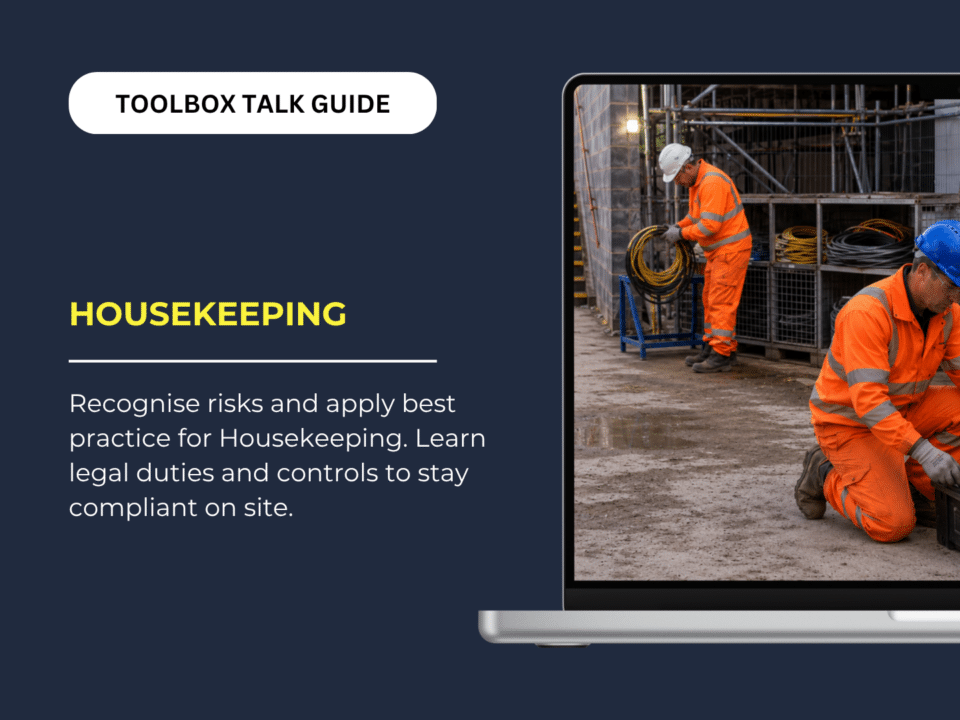
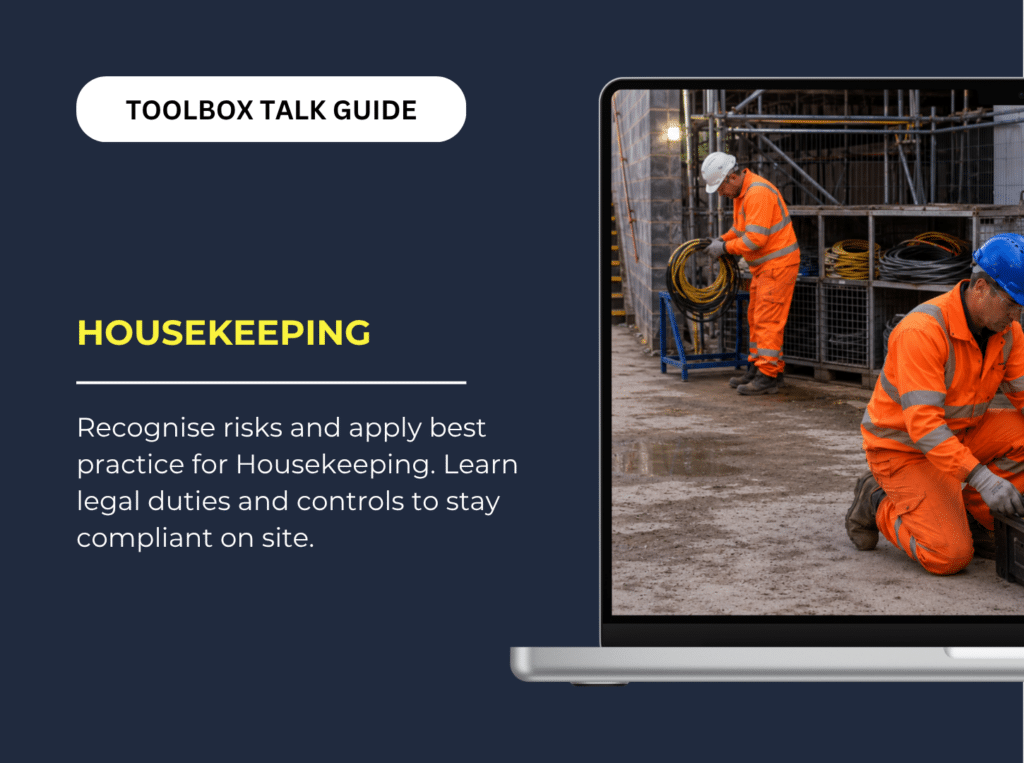
Poor housekeeping on construction sites can lead to a host of problems. Cluttered workspaces increase the chance of accidents, make emergency exits difficult to access, and create an environment where materials and tools are easily misplaced. These issues not only hinder productivity but also compromise the safety of your workers.
Key Challenges:
- Cluttered walkways and workspaces: Items left lying around can cause trips or obscure potential hazards.
- Disorganised tools and materials: Difficulty in locating materials can lead to wasted time and increased frustration.
- Fire hazards: Accumulation of debris, especially flammable materials, poses a significant risk.
Good housekeeping is not just about cleanliness; it's about keeping the workplace safe and organised.
Three Types of Hazards Caused by Poor Housekeeping
There are three major types of hazards that arise from poor housekeeping:
-
Strain and Sprain Injuries
Workers may suffer strains or sprains from lifting or carrying heavy items that are left out of place. Poorly stacked materials can also shift, causing injuries as workers attempt to manoeuvre around them. -
Lacerations and Cuts
Sharp objects, such as tools or exposed metal, are often left in disorganised areas, leading to lacerations. When materials are not stored properly, the risk of accidental cuts increases significantly. -
Slips, Trips, and Falls
One of the most common hazards caused by poor housekeeping is slips, trips, and falls. This can happen when floors are cluttered with debris, liquids are spilled and not cleaned up, or walkways are blocked.
By identifying and communicating these hazards, companies can take steps to eliminate the risks; and helps to prevent these common but avoidable injuries.
How to Avoid Unnecessary Housekeeping Injuries
The good news is that most housekeeping-related injuries are preventable. Here are some best practices:
- Keep walkways clear: Ensure that all paths are free of obstacles, such as tools, cords, and materials. Use signs to indicate wet or hazardous areas.
- Organise tools and materials: Assign proper storage areas for all tools and equipment. Frequently used items should be easily accessible, while less commonly used items can be stored safely out of the way.
- Regular inspections: Conduct regular inspections to identify potential hazards, such as loose wires, debris, or uneven surfaces. With Paperless, digital inspections can be automated and tracked in real-time, ensuring consistency.
- Educate workers: Proper training is essential for all workers. Teach them the importance of good housekeeping, from how to store materials properly to the consequences of poor housekeeping practices.
- Establish housekeeping as a shared responsibility: Everyone on site should take ownership of housekeeping. Encourage a culture where workers understand that keeping the site clean and organised is crucial to their own safety.
Examples of Poor Housekeeping
Examples of poor housekeeping practices are all too common on construction sites:
- Blocked exits and walkways: In an emergency, cluttered exits can lead to devastating delays.
- Improper storage of materials: Materials stacked haphazardly or tools left out increase the likelihood of accidents.
- Neglected cleaning tasks: Spills, dust, and debris are often ignored, creating slippery or unsafe surfaces.
Construction Site Housekeeping Tips
Maintaining a clean and safe work environment is a continuous process. Here are some tips to help improve housekeeping on construction sites:
- Set a schedule: Regularly scheduled housekeeping tasks help prevent clutter from building up. Create a checklist that includes sweeping walkways, organising tools, and properly storing materials at the end of each day.
- Use containers and bins: Place containers for scrap materials, waste, and hazardous substances throughout the site to encourage proper disposal.
- Assign specific areas: Designate specific areas for storing tools, equipment, and materials. Label these areas clearly and ensure all workers understand where items belong.
- Keep safety in mind: Ensure that safety equipment such as fire extinguishers and first aid kits are easily accessible, and keep all emergency exits clear.
Conclusion
Poor housekeeping isn’t just about cleanliness – it’s about safety. From preventing slips and falls to reducing strain injuries, keeping a clean and organised worksite can significantly lower the risk of accidents and injuries. Implementing good housekeeping practices is an ongoing process, but with the right tools, such as those offered by Paperless, managing these tasks becomes much easier. Paperless helps teams stay organised by digitising housekeeping processes, making it easier to track tasks, spot hazards, and ensure compliance.
With our digital tools, you can be confident that your construction site remains not only tidy but also safe for all workers. Let’s keep safety a priority and ensure good housekeeping is always in place.

See What Paperless Could Do for Your Sites
One brochure. The full platform.
Explore the tools available to help reduce paperwork, improve visibility and keep workforce, safety and project records connected.