

In the Loop
Faced with an urgent demand to deploy teams on-site, BAM Nuttall approached Paperless Construction to give them access to the paperwork they needed.
A unique feature of the railways is that when a piece of track is damaged or becomes unusable, you can’t just set up a couple of traffic cones and run a small diversion around it. Rail tracks also tend to be fewer in number than roads yet form vital links between communities and any disruption tends to have massive consequences. When a section of rail is put out of commission, though, by natural erosion of the track bed, an accident, or adverse weather conditions, they give owners very little or no advance warning but have to be repaired as rapidly as possible to get the rolling stock moving again.
That gives even engineering and construction companies like BAM Nuttall significant problems. They are part of the Royal BAM Group, one of Europe’s largest construction companies with over 20,000 employees and a turnover of 7 billion pounds, yet with a mountain of experience and expertise behind them, the practicalities of a seemingly simple project are imperilled when severe time constraints are involved.
98%
Paperless
<5 hours
project to go live
100%
Briefing return rate
Discover the capabilities of Paperless Construction, the top compliance management software.
The Problem
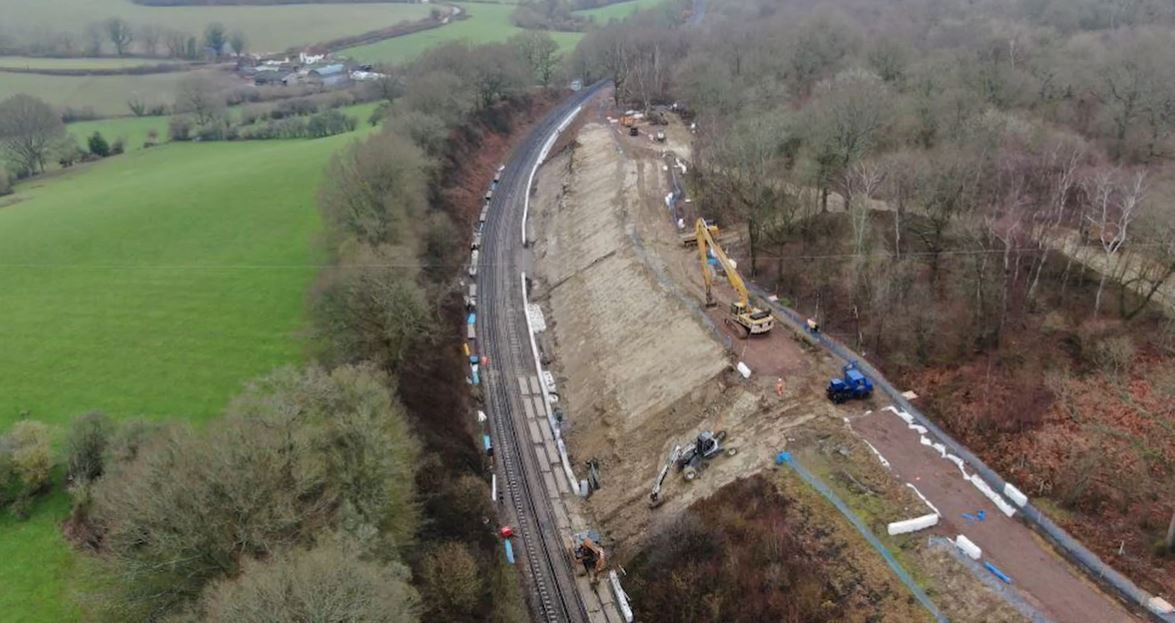
The problem involved two projects in the South-Eastern part of the UK – the Catford Loop embankment project - a 300-metre Grundomat installation which included the cresting of the embankment and ballast retention, and the High Brooms cutting project following 3 active slips along the cutting between Tunbridge Wells and Tonbridge which resulted in a 21-day blockade. Network Rail was keen for the line to be opened for rail traffic again.
Ian Alberto, the Site Engineer/Manager for both projects, explained the problems that BAM Nuttall had with each of the projects, the contract for the Catford Loop works not being signed off until a week before the agreed start of engineering works, and the High Brooms cutting works where teams were mobilised just 5-6 hours after the first late afternoon land slippage.
He said that the challenges for the Catford Loop embankment project were unique. Located in Central London next to a residential area, the 40-50 strong works teams were only granted possessions – i.e. access to the 3 work sites – in consecutive weeks, giving the company just a week to get the project set up.
The second contract was even more critical, and with no forewarning, there was little documentation in place and no chance of printing out hundreds of pages of physical paperwork, such as CPPs, WPPs and briefing notes before the work commenced.
Ian Alberto, the Site Engineer/Manager for both projects, explained the problems that BAM Nuttall had with each of the projects, the contract for the Catford Loop works not being signed off until a week before the agreed start of engineering works, and the High Brooms cutting works where teams were mobilised just 5-6 hours after the first late afternoon land slippage.
He said that the challenges for the Catford Loop embankment project were unique. Located in Central London next to a residential area, the 40-50 strong works teams were only granted possessions – i.e. access to the 3 work sites – in consecutive weeks, giving the company just a week to get the project set up.
The second contract was even more critical, and with no forewarning, there was little documentation in place and no chance of printing out hundreds of pages of physical paperwork, such as CPPs, WPPs and briefing notes before the work commenced.
Digital by Default
BAM Nuttall is committed to digital engineering and the maintenance of digital models to support construction projects on the ground. It also maintains a net-zero carbon philosophy and sustainability as a core focus. Rail track maintenance follows traditional working processes, though, and had there been time available; both projects would have been accompanied by the printing and distribution of hundreds of paper drawings and documents.
This was not feasible for either project, and Ian called in Paperless Construction to assist them. As Ian explained, ‘I could get all the paperwork done in advance and uploaded to the iPad, which gave me remote access to it on site. For me, that was perfect”. As BAM Nuttall already holds digital project records in their Common Data Environment, the Paperless Construction app made it easy to upload the documents needed for the project.
The High Brooms emergency was even more of a challenge, as the hundreds of documents required for the project could not have been printed in the time available, yet Paperless Construction eliminated the need entirely. All on-site managers had access to the documents, and workers were able to be signed in and briefed away from the office location.
Ian Alberto commented that “Paperless is a brilliant way of keeping records and having access to them from anywhere or when you don’t have WiFi or don’t have a compound set up on-site”.

Hitting the Ground Running
With everything done remotely, up to 90% of documentation online and available on iPads, teams could deploy on-site without WiFi or, even, a site office. (That extra 10% accounts for some A0 drawings and COVID related H&S posters). There was some initial resistance, but that was mainly from ‘more traditional’ team members, but as soon as they saw the Paperless Construction app's benefits, they became keen to carry it forward and use it on future projects.
Some of the principal benefits outlined by Ian were the ability to exchange information and share documents with other engineers within the app and without having to rely on email’s texts and Whatsapp. Where the paperless Construction app really proved its worth, though, was its ability to handle daily tasks, such as briefings, permits and task briefings – with all associated documents and drawings immediately available via the app – and to keep an up-to-date record of all work processes and personnel activities for timekeeping and management updates.
Ian was able to log in and see exactly who was on-site and what they were doing, logging hours worked, breaks and travel times, and incorporating it into management reports that even included how many people had been briefed on each task, as well as weekly and monthly KPI reporting. This saved Ian many hours of poring over diaries, hand-written notes and other inaccurate paper records. He also calculated that eliminating the time spent driving back to the office for paperwork with a 15-minute trip each time saved him about 5 hours a week on top of the time spent each evening retrieving hundreds of physical documents for the next days' tasks.
Some of the principal benefits outlined by Ian were the ability to exchange information and share documents with other engineers within the app and without having to rely on email’s texts and Whatsapp. Where the paperless Construction app really proved its worth, though, was its ability to handle daily tasks, such as briefings, permits and task briefings – with all associated documents and drawings immediately available via the app – and to keep an up-to-date record of all work processes and personnel activities for timekeeping and management updates.
Ian was able to log in and see exactly who was on-site and what they were doing, logging hours worked, breaks and travel times, and incorporating it into management reports that even included how many people had been briefed on each task, as well as weekly and monthly KPI reporting. This saved Ian many hours of poring over diaries, hand-written notes and other inaccurate paper records. He also calculated that eliminating the time spent driving back to the office for paperwork with a 15-minute trip each time saved him about 5 hours a week on top of the time spent each evening retrieving hundreds of physical documents for the next days' tasks.
Government Compliance
Health and Safety and GPDR compliance are a standard feature of the Paperless Construction app – particularly appropriate for areas subject to regular updates, as we have seen with COVID social distancing rules. Inductions and task briefs can be linked to a user’s Paperless profile and held together with the rest of their personal information; securely and GPDR compliant in the Paperless Construction cloud.
Such information used to be stored in physical folders in the office, but, as Ian explained, neither project had a site compound where such paperwork could be stored, and as a bonus, visiting H&S advisors had immediate access to any team members’ training and competency records on request.
An Easy Implementation
Ian was impressed with the ease and immediacy of the implementation of the Paperless Construction app. He was able to use it immediately, and any issues were sorted out within a couple of hours. He also stated that it fell directly in line with BAM Nuttalls drive towards digital by default and its commitment to sustainable construction.
The app was ‘more user friendly than the legacy systems he used to work with and painless to roll out.
Would he recommend it? ‘Definitely, a benefit compared to how we work now and aspire to work,’ he said. ‘It makes life as a Site Manager much easier. It’s easier to manage hours, manage documents, manage access and manage simple briefings – It’s a very useful and efficient tool that will speed up engineering processes and the way we work on site.’
"It makes life as a Site Manager much easier. It’s easier to manage hours, manage documents, manage access and manage simple briefings – It’s a very useful and efficient tool that will speed up engineering processes and the way we work on site."
Ian Alberto - Site Engineer
